NIST CSF 2.0: What Changed and Which Policies You Need
NIST Cybersecurity Framework 2.0 (CSF 2.0) was released in February 2024, introducing the most significant update to the framework since its original publication in 2014. The headline change is a new sixth function — Govern — but the update goes deeper: expanded scope, stronger supply chain guidance, and improved alignment with ISO 27001 and SOC 2. This guide covers exactly what changed, which function requires which policies, and how to map your existing programme to CSF 2.0.
What Is NIST CSF?
The NIST Cybersecurity Framework is a voluntary framework developed by the National Institute of Standards and Technology (NIST) to help organisations manage cybersecurity risk. Originally designed for US critical infrastructure, it has become the de facto cybersecurity baseline for organisations worldwide — from enterprise technology companies to NHS trusts benchmarking their security posture.
CSF 2.0 is voluntary for most organisations but effectively mandatory for US federal contractors. In the UK and EU, it's increasingly demanded by enterprise buyers and cyber insurers as evidence of systematic security management. For the full subcategory-to-control mapping, see our NIST CSF framework page.
What Changed in NIST CSF 2.0?
Quick answer. The headline change is the new Govern function, elevating governance from scattered Identify-function categories into its own pillar covering organisational context, risk strategy, roles, policy and oversight. CSF 2.0 also broadens its stated scope beyond critical infrastructure to organisations of any size.
1. New Govern Function (GV)
The biggest structural change is the addition of a sixth function: Govern. In CSF 1.1, governance elements were scattered across the Identify function. CSF 2.0 elevates governance to its own function, recognising that effective cybersecurity starts at the board and leadership level.
The Govern function covers: organisational context, risk management strategy, cybersecurity supply chain risk, roles and responsibilities, policies, and oversight. Everything else in the framework depends on Govern being in place first.
2. Expanded Scope
CSF 1.1 was explicitly scoped to critical infrastructure. CSF 2.0 removes this restriction — it is designed for all organisations, regardless of size, sector, or geographic location. This reflects the reality that every organisation with digital assets has cybersecurity risk.
3. Strengthened Supply Chain Risk Management
Supply chain risk management was a minor element of CSF 1.1. CSF 2.0 dedicates an entire category (GV.SC) to cybersecurity supply chain risk, reflecting high-profile incidents like SolarWinds and the growing regulatory focus on vendor risk (DORA, NIS2).
4. Better Framework Alignment
CSF 2.0 includes informative references mapping outcomes to ISO/IEC 27001:2022, CIS Controls v8, NIST SP 800-53, and other frameworks — making cross-framework compliance significantly easier to document.
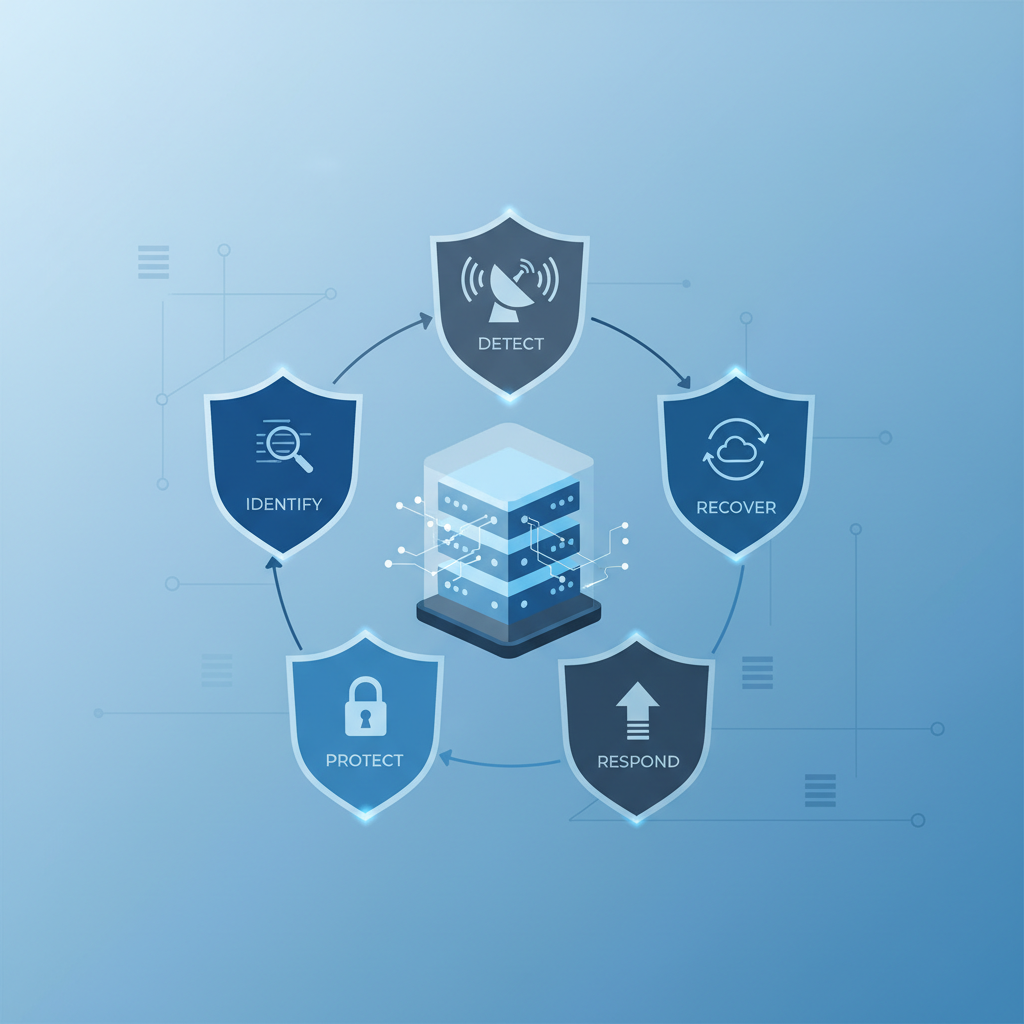
The 6 Functions and the Policies They Require
Quick answer. Each of the six functions — Govern, Identify, Protect, Detect, Respond, Recover — expects specific written policies; for example, Govern requires a cybersecurity policy and a leadership-reviewed risk management strategy, while the final two need incident response and recovery plans. The table maps function codes to the required documents.
| Function | Code | Key Policies Required |
|---|---|---|
| Govern | GV | Cybersecurity Policy, Risk Management Strategy, Roles & Responsibilities, Supply Chain Risk Policy |
| Identify | ID | Asset Management Policy, Risk Assessment Policy, Business Environment Policy |
| Protect | PR | Access Control Policy, Data Protection Policy, Security Awareness Training Policy, Change Management Policy, Secure Configuration Policy |
| Detect | DE | Security Monitoring Policy, Anomaly Detection Policy, Log Management Policy |
| Respond | RS | Incident Response Policy, Communication Policy, Incident Analysis Policy |
| Recover | RC | Business Continuity Policy, Disaster Recovery Policy, Recovery Testing Policy |
Deep Dive: The Govern Function
Quick answer. Because Govern is new in CSF 2.0, most organisations need to create policies for it rather than relabel old ones: organisational context (GV.OC), risk management strategy (GV.RM), roles and responsibilities, policy management and oversight each carry their own documentation expectations.
Because Govern is new in CSF 2.0, most organisations need to create or update policies specifically for it:
GV.OC — Organisational Context
Requires documenting your organisation's mission, stakeholders, legal and regulatory requirements, and cybersecurity objectives. Typically captured in a Cybersecurity Risk Strategy document reviewed annually by senior leadership.
GV.RM — Risk Management Strategy
A Risk Management Strategy policy that defines: risk appetite and tolerance, how risk is expressed (qualitative vs quantitative), risk acceptance criteria, and how the risk register is maintained and reviewed. This is distinct from a risk assessment — it's the framework for how risk decisions are made.
GV.SC — Supply Chain Risk Management
A standalone Vendor and Supply Chain Risk Policy covering: how vendors are classified by risk tier, security requirements per tier (questionnaire, contract clauses, audit rights), onboarding and off-boarding procedures, and periodic review cadence. CSF 2.0 expects this to be a mature, documented process — not ad hoc vendor reviews.
GV.RR — Roles and Responsibilities
Documents who is responsible for each cybersecurity function — not just "the CISO" but named roles down to team level. Often captured in a RACI matrix or embedded in the Information Security Policy.
GV.PO — Policies
Meta-requirement: you need a policy about your policies. A Policy Management Policy that defines: how policies are created, approved, distributed, and reviewed; version control requirements; and how employees are trained on and acknowledge policies.
Implementing NIST CSF 2.0: Where to Start
Quick answer. The implementation path has four steps: map existing policies and controls to CSF 2.0 categories, choose a target tier per function, remediate the gaps by writing or updating policies, then maintain through annual and incident-driven reviews. Start with the Govern function — it anchors the rest, and for many UK SMEs it is the only genuinely new writing required.
The four-step implementation path:
- Current state assessment — Map existing policies and controls to CSF 2.0 categories to identify gaps
- Target state definition — Choose your target tier (1-4) for each function based on risk profile
- Gap remediation — Write missing policies, update existing ones, implement required controls
- Ongoing improvement — Annual reviews, incident-driven updates, framework alignment checks
Prioritisation for First-Time Implementations
If you're starting from scratch, prioritise in this order: Govern (you can't manage what you haven't defined), then Identify (you can't protect what you don't know you have), then Protect (controls with the highest risk reduction ROI), then Detect, Respond, and Recover.
NIST CSF 2.0 vs ISO 27001:2023
NIST CSF 2.0 and ISO 27001:2023 are complementary, not competing. ISO 27001 is a certifiable standard with prescriptive control requirements. CSF 2.0 is a flexible framework for understanding and managing cybersecurity risk. Organisations pursuing ISO 27001 certification will find that CSF 2.0 implementation covers approximately 80% of ISO 27001 policy requirements. CSF 2.0's new Govern function maps closely to ISO 27001's strengthened leadership and planning clauses.
NIST CSF 2.0 Policy Pack
PolicySuite's NIST CSF Alignment Pack includes all 18 policies mapped to framework subcategories. Built-in gap analysis shows exactly which CSF 2.0 outcomes your current policies cover.
Get StartedFurther Reading
Quick answer. The links below include the official NIST CSF 2.0 publication — the primary source for the framework — alongside related guides on ISO/IEC 27001:2022 policy requirements, the ten essential cybersecurity policies, and SOC 2 documentation.
- ISO 27001:2023 Policy Requirements
- 10 Essential Cybersecurity Policies Every Organisation Needs
- SOC 2 Type II Policy Requirements
- NIST CSF framework page and control library
- More compliance articles
Keep reading
ISO 27001:2022 — Updated Policy Requirements
The 2022 revision: 11 new controls, 4 themes, and what every Stage 2 auditor checks.
10 cybersecurity policies every SME needs
The minimum set Cyber Essentials and ICO breach assessments expect you to have in place.
SOC 2 Type II Policy Checklist
All five Trust Service Criteria mapped to the policies your auditor needs to see.